Why Articulation Matters More Than Compression
Compression is one of the most misunderstood tools in electric guitar.
People talk about sustain.
They talk about making the tone “bigger.”
They talk about leveling dynamics.
Articulation is rarely part of the conversation.
And without articulation, there is no intention.
What Most Compressors Get Wrong
An open chord can sound large even without compression.
What’s difficult is keeping each string distinct as the chord moves.
What’s difficult is preserving the attack.
Most guitar compressors reduce dynamics.
Very few preserve gesture.
When compression is poorly set, the guitar loses dimension.
The attack flattens.
Arpeggios turn into blocks.
In a mix, that translates into an instrument that occupies space, but defines nothing.
Articulation is not volume.
It is not sustain.
It is clarity at the exact moment the pick meets the string.
It is the difference between a chord that sounds correct
and a chord that breathes.
In twelve-string contexts — or when aiming for that harmonic illusion on a six-string — articulation becomes even more critical.
Control, Not More Compression
Compression should not be heard as an effect.
It should be felt as structure.
It’s not about compressing more.
It’s about controlling better.
Well-calibrated compression does not add artificial character.
It reinforces what is already there.
It preserves attack.
Tightens the low end.
Allows upper harmonics to emerge without harshness.
That is refinement.
Compression should not be heard as an effect.
It should be felt as structure.
When articulation remains intact, the guitar sits in the mix without effort.
That matters more than any promise of endless sustain.
—
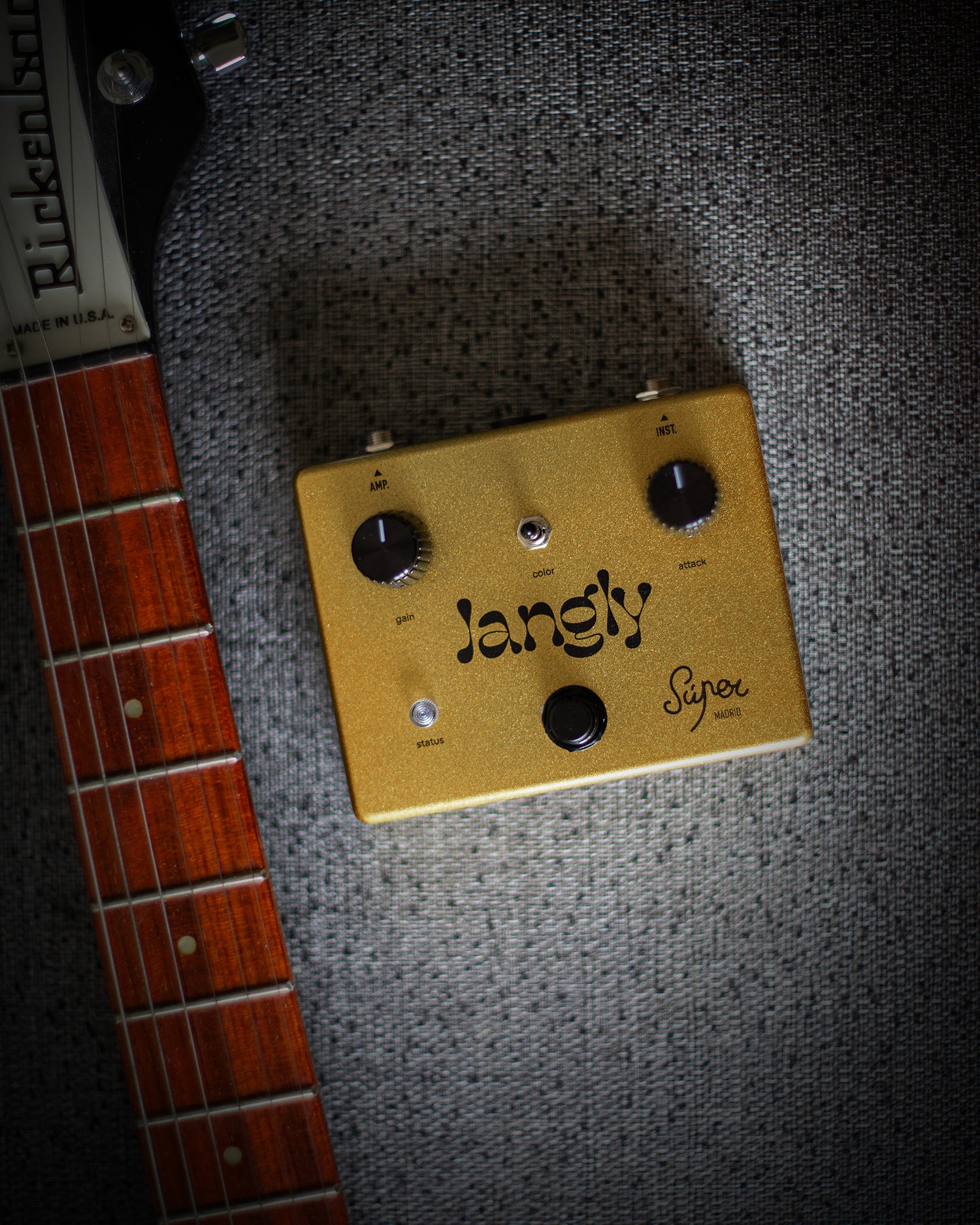
Jangly — Reference Jangle Compressor
Built in small batches.